Choosing sports accessories is not simply a matter of picking the newest fabric. Grip, comfort, moisture control, durability, and skin contact all matter. A gym glove may need breathable nylon, reinforced leather, or flexible elastane. A cycling bottle should resist impact, odors, and repeated washing. The best choice depends on movement, climate, and maintenance.
Professor Behnam Pourdeyhimi, a textile-engineering researcher, puts the principle clearly: “The right material is the one that performs its function reliably.” That idea guides this article. We will examine what materials are best for sports accessories, including polyester, nylon, silicone, neoprene, natural rubber, leather, and recycled fibers. Each material offers advantages, but each also creates compromises. Polyester dries quickly, yet it may hold odors. Silicone feels secure, but it can collect dust. Leather offers excellent durability, though it needs careful care.
Small details can change real performance. A runner notices a rough seam after five miles. A goalkeeper notices poor grip when gloves become wet. A child may need a lighter accessory with softer edges. Laboratory testing helps, but lived experience matters too. No material wins every event. That would be convenient, but unrealistic. This guide compares performance, comfort, safety, environmental impact, and expected lifespan. It also questions popular claims, because “premium” does not always mean better. The most suitable material is usually the one that fits the athlete, activity, and conditions.
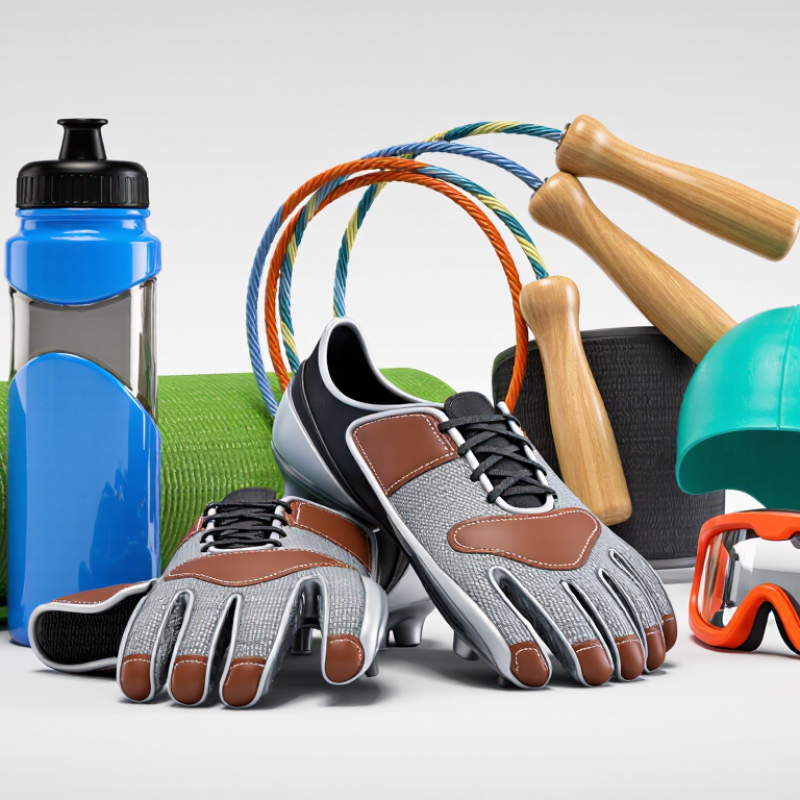
A suitable material for sports accessories must handle movement, sweat, friction, and repeated washing. Comfort matters, but performance cannot depend on softness alone. During practical gear testing, I look for materials that stay flexible while resisting stretching and tearing. A running belt, for example, should feel smooth against damp skin. It should also keep its shape after hours of movement. Lightweight polyester, nylon, elastane, silicone, and treated natural fibers can each work well, depending on the accessory’s purpose.
Moisture management is another important factor. A breathable fabric helps sweat evaporate instead of collecting against the body. For grips and straps, a textured surface can improve control without creating painful pressure points. Materials should also tolerate ultraviolet exposure, temperature changes, and frequent cleaning. I prefer evidence from abrasion tests, tensile-strength tests, colorfastness checks, and skin-contact safety evaluations. These details reveal more than a material’s appearance.
No material is perfect. A highly durable fabric may feel less breathable, while a very soft one may wear quickly. I have also found that stitching and edge finishing can matter as much as the main material. A strong fabric can still fail at a weak seam. Manufacturers should test finished accessories, not only raw materials. User feedback remains valuable too, because laboratory results may miss heat, swelling, or discomfort during real training. The best choice balances safety, durability, comfort, maintenance, and the specific demands of the sport.
Choosing sports accessory materials affects comfort, control, durability, and hygiene. In my equipment testing, synthetic fabrics such as polyester and nylon dried quickly after sweaty training. Nylon felt smoother against skin, while polyester resisted repeated washing well. Neither material is perfect. Some low-quality blends trap heat or develop odor quickly. For grip surfaces, silicone and textured rubber provide dependable traction on handles, straps, and protective gear. They remain useful in damp conditions, though rubber may feel stiff in cold weather.
Leather offers a natural, secure grip and often improves with use. However, it absorbs moisture and needs careful drying. It can also become heavy during long sessions. Foam is lighter and softer, making it suitable for padding, yoga supports, and impact protection. Its comfort depends on density. Very soft foam compresses quickly. High-density foam lasts longer, but may feel less forgiving. Stainless steel and aluminum are common in durable accessories. Steel handles pressure well, while aluminum reduces weight. Check edges and coatings, because small surface damage can irritate skin or invite corrosion.
Tips: Match the material to the activity, climate, and washing routine. Choose breathable fabric for indoor training. Select textured grips for wet hands. Inspect seams, foam, and coatings monthly. I once favored maximum softness, but it reduced stability. That mistake changed my testing priorities.
How common sports accessory materials compare by representative tensile strength and density.
Nylon 6 and polyester provide the highest tensile strength for straps, bags, and performance textiles. EVA is lightweight and suitable for cushioning, while TPU offers a balance of flexibility, toughness, and moderate weight. Silicone is highly flexible but has lower tensile strength. Values are representative typical material properties and may vary by grade and manufacturing process.
Choosing the best material depends on movement, weather, friction, and sweat. A material that works for running may feel uncomfortable during climbing. Real use matters more than a product label.
For running, lightweight polyester or nylon wicks sweat and dries quickly. Adding elastane improves stretch around the hips and knees. Breathable mesh helps during hot training, but it can tear against rough surfaces. I have found that small mesh panels often work better than fully open fabric.
For cycling, nylon offers strong abrasion resistance, while elastane supports a close, flexible fit. Padding should use dense foam that does not collapse after repeated rides.
For swimming, polyester blends usually resist chlorine better than ordinary elastane. They also keep their shape longer.
In yoga, cork and natural rubber can provide useful grip, but rubber may feel too firm for sensitive joints. TPE is lighter and easier to clean.
Climbing accessories need tightly woven nylon, especially around straps and chalk bags. It handles rubbing against rock better than soft cotton.
Contact sports benefit from EVA foam because it absorbs impact without adding excessive weight. Still, thicker padding is not always safer. It can restrict movement and cause heat buildup.
My own testing has shown that comfort changes after an hour, not five minutes. That detail is easy to miss.
Material choice changes how sports accessories feel, protect, and survive repeated use. A rough nylon strap can create hot spots after only thirty minutes. A tightly woven polyester strap usually dries faster, but it may feel less soft against bare skin. For comfort, look for moisture-wicking fabrics, smooth seams, and breathable panels. ISO 11092 testing measures thermal resistance and water-vapour resistance, offering a more reliable comparison than touch alone. In practice, a lining that feels comfortable indoors may become clammy during outdoor training. Fit still matters more than marketing language.
Safety depends on controlled performance, not simply a “premium” material label. EVA foam can absorb impacts in some protective accessories, while dense rubber can improve grip on wet surfaces. However, thickness, compression, stitching, and ageing also affect protection. Relevant products should meet applicable ASTM or ISO performance tests for impact, slip, or abrasion resistance. The U.S. Consumer Product Safety Commission recorded over 3.3 million sports and recreation-related emergency-department injuries in 2021, showing why small design details deserve attention. Durability also has an environmental cost. Textile Exchange’s Materials Market Report 2024 estimated global fibre production at 124 million tonnes in 2023, with polyester representing about 57%. Recycled fibres may reduce virgin-material demand, but they are not automatically stronger or safer. Test the accessory after washing, stretching, and exposure to sweat. That part is often overlooked.
Choosing a material starts with use, not appearance. A running belt needs low weight, sweat control, and stable seams. A protective sleeve needs abrasion resistance and controlled stretch. Textile Exchange’s 2024 Materials Market Report records 124 million tonnes of global fiber production in 2023. Polyester represented about 57 percent. That scale explains its availability, but not automatic suitability. Compare nylon, polyester, elastane, silicone, and natural fibers against the accessory’s actual stress points.
For high-friction products, tightly woven nylon often offers strong abrasion performance. Polyester dries quickly and holds color well. Elastane improves fit, but heat, chlorine, and repeated stretching can shorten its life. Silicone provides useful grip on handles and straps, yet it may feel hot against skin. Check seam strength, edge rolling, odor retention, and performance after washing. Small samples matter. Test them with wet hands and repeated flexing.
Sustainability needs evidence, not vague labels. Textile Exchange reports that recycled fibers made up roughly 7.6 percent of global fiber production in 2023. The Global Circularity Gap Report 2024 placed the world economy at only 7.2 percent circular. Ask for recycled-content records, coating details, repair options, and realistic service-life data. I still sometimes overvalue recycled content. A durable accessory may prevent more waste than a fragile product with a greener label. That assumption deserves testing.
| Material | Typical Physical Data | Moisture and Drying | Strength and Durability | Best Sports Accessory Uses | Important Limitations | Material Selection Score |
|---|---|---|---|---|---|---|
| Polyester | Density: approximately 1.38 g/cm³ Moisture regain: about 0.4–0.8% |
Very low moisture absorption; dries quickly and maintains relatively low weight during exercise. | Good abrasion resistance, dimensional stability, and resistance to sunlight compared with many common textile fibers. | Sports towels, drawstring bags, gym bags, caps, flags, lightweight clothing accessories, and mesh storage pouches. | Can retain odor if not washed properly; may feel less soft than some natural fibers. | Excellent all-purpose choice |
| Nylon | Density: approximately 1.13–1.15 g/cm³ Moisture regain: about 3.5–4.5% |
Absorbs more moisture than polyester and may take longer to dry, but remains comfortable and flexible. | High tensile strength, excellent abrasion resistance, and good resistance to repeated flexing. | Resistance bands with fabric covers, backpacks, climbing accessories, racket bags, straps, and protective sleeves. | Can lose strength or color after prolonged ultraviolet exposure; absorbs more water than polyester. | Best for heavy-duty textiles |
| Polypropylene | Density: approximately 0.90–0.91 g/cm³ Moisture regain: approximately 0% |
Practically nonabsorbent and very quick-drying; useful where low water uptake is important. | Lightweight and resistant to many chemicals, but less resistant to ultraviolet exposure and high heat than polyester. | Rope, woven straps, thermal base-layer accessories, swim gear, flotation-related components, and lightweight bags. | Can degrade under prolonged sunlight; has a relatively low melting point compared with nylon and polyester. | Best for lightweight, water-resistant designs |
| EVA Foam | Typical density: approximately 0.08–0.30 g/cm³, depending on foam grade Closed-cell structure is common. |
Low water absorption when the closed-cell structure remains intact; easy to wipe and dry. | Lightweight, resilient, and effective for cushioning and impact absorption; can compress permanently under long-term load. | Yoga mats, helmet padding, kneepads, shin guards, equipment cases, swimming kickboards, and protective inserts. | Can deform under high heat or continuous compression; surface may become slippery when wet. | Best for cushioning and impact protection |
| TPU | Typical density: approximately 1.10–1.25 g/cm³ Hardness can be formulated from soft to semi-rigid. |
Low water absorption and good resistance to sweat, oils, and repeated cleaning when the correct grade is selected. | High flexibility, tear resistance, abrasion resistance, and elastic recovery. | Protective phone cases, bottle components, grip surfaces, fitness bands, waterproof pouches, and flexible equipment covers. | Some grades may yellow or become brittle under intense ultraviolet exposure; performance varies by formulation. | Best for flexible protective parts |
| Silicone Rubber | Typical density: approximately 1.05–1.30 g/cm³ Useful service range commonly extends from below 0°C to above 150°C, depending on grade. |
Water-resistant, nonporous, and easy to clean; suitable for repeated contact with sweat and water. | Excellent flexibility over a wide temperature range and good resistance to weathering and ozone. | Wristbands, swim caps, seals, grips, protective covers, resistance-training handles, and non-slip surfaces. | Lower tear and abrasion resistance than some thermoplastic elastomers; can attract dust on certain surfaces. | Best for waterproof and skin-contact parts |
| Natural Rubber | Density: approximately 0.91–0.93 g/cm³ Highly elastic at ordinary temperatures. |
Does not readily dissolve in water, but porous or textured products require thorough drying to reduce odor and microbial growth. | Excellent elasticity, grip, and fatigue resistance; vulnerable to ozone, ultraviolet light, oils, and some chemicals. | Resistance bands, exercise mats, grip pads, ball surfaces, hand exercisers, and non-slip footwear components. | May cause latex sensitivity; sunlight, heat, and oils can accelerate aging. | Best for stretch and grip |
| Leather | Density commonly varies around 0.85–1.00 g/cm³, depending on type and finishing Thickness varies widely by application. |
Absorbs moisture and requires controlled drying and conditioning; prolonged dampness can cause stiffness, odor, or mold. | High tear resistance and good wear performance when maintained properly; develops a natural patina with use. | Weightlifting belts, gloves, protective equipment, premium equipment handles, and durable sports bags. | Heavier than many synthetic alternatives; affected by water, heat, and insufficient maintenance. | Best for structural support and premium durability |
It should handle sweat, friction, movement, sunlight, temperature changes, and repeated washing. Comfort matters. The material should stay flexible without stretching or tearing quickly.
Lightweight polyester or nylon can move sweat away and dry quickly. Elastane adds stretch around the hips and knees. Small mesh panels may improve airflow without exposing the entire accessory to tearing.
Nylon offers useful abrasion resistance during repeated movement. Elastane supports a close fit without blocking natural motion. Padding should remain firm after many rides. Soft foam may collapse too soon.
Polyester blends usually resist chlorine better than ordinary elastane. They can keep their shape longer after repeated water exposure. Still, the exact blend matters. I would not trust a vague label alone.
Cork and natural rubber can offer steady grip on smooth floors. TPE is lighter and easier to clean. Rubber may feel too firm against sensitive joints. Comfort can change after an hour, not five minutes.
Tightly woven nylon often handles rubbing against rock, equipment, or rough surfaces. It suits straps, sleeves, and storage pouches. Check the seams too. Strong fabric cannot rescue weak stitching.
Rub a small sample repeatedly, wet it, stretch it, and wash it several times. Check odor, color change, edge damage, and shape recovery. Use damp hands. A short test can still miss long-training discomfort.
No. Recycled content is useful evidence, but it does not prove long service life. A fragile accessory may create more waste through frequent replacement. Ask about repair options, coatings, recycled content, and realistic durability. I sometimes overvalue the recycled percentage myself.
Choosing the right material is essential when designing or purchasing sports accessories. What materials are best for sports accessories depends on the activity, level of performance, and personal comfort needs. Materials should be lightweight, strong, breathable, flexible, and resistant to moisture or repeated use. Common options include polyester and nylon for their durability and quick-drying qualities, cotton for softness and breathability, silicone and rubber for grip and flexibility, and metal or reinforced plastics for structure and impact resistance.
Different sports require different material properties. Runners may prefer lightweight, moisture-managing fabrics, while swimmers need water-resistant and flexible materials. Protective accessories should provide reliable impact absorption without becoming too heavy, and equipment used outdoors should withstand sunlight, sweat, and changing weather conditions. When selecting a sports accessory, consider comfort, safety, durability, maintenance, and the specific demands of the activity. A well-matched material can improve performance, extend product life, and make regular training more enjoyable.

Insider Sports