What is the best way to transport sports balls without losing pressure, shape, or playing feel? The answer depends on the ball, the distance, and how it will be handled. A basketball carried to a local court needs different protection from dozens of soccer balls shipped to a tournament. Small details matter: a valve pressed against hard equipment, a damp bag, or a loose load can create avoidable wear.
The need is substantial. SFIA’s 2024 Topline Participation Report recorded 242.8 million Americans aged six and older participating in at least one sport or fitness activity during 2023. That figure does not measure ball shipments, but it shows how widely sports equipment moves between homes, schools, clubs, and events. For packaging guidance, the International Safe Transit Association’s 3-Series tests offer a useful industry reference: they simulate distribution hazards such as vibration and impacts. They are not a sports-ball packing recipe, though. That distinction matters.
A practical transport plan starts with the ball’s size and construction. Keep balls clean and dry, prevent sharp gear from rubbing against them, and avoid stacking heavy items on top. For longer trips, use a ventilated ball bag or a sturdy box with enough padding to limit movement. Check manufacturer guidance before reducing inflation; not every ball should be transported deflated. There is no perfect setup for every trip. Even a well-packed ball can arrive scuffed, so inspect it before play.
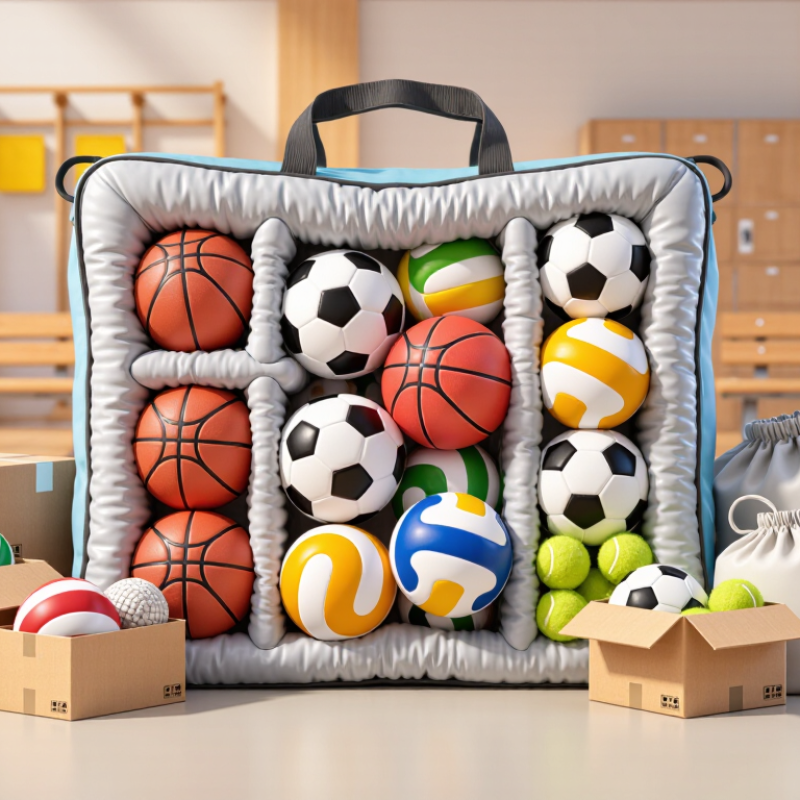
Sports balls need different handling because their size, pressure, and outer materials vary. A soccer ball or basketball can often travel inflated, but avoid stacking heavy equipment on top. Heat inside a parked vehicle may raise pressure. Check the ball’s recommended pressure before a long trip, and use a gauge rather than judging by feel alone. Small detail, big difference.
Tennis balls are compact, but their felt can collect grit and moisture. Keep them in a closed container or a dry pocket of the kit bag. Golf balls travel well in a hard-sided case or divided pouch, which limits scuffs and rattling. A volleyball’s softer surface can be marked by sharp buckles, so place it away from tools and metal fittings. Separate clean balls from muddy shoes.
The carrying setup should match the journey. For a short walk, a breathable mesh sack is convenient; for a crowded bus or flight, a structured bag offers better protection. Do not cram every ball into one compartment. That is easy to do, and I still find it tempting when space is tight. Leave room for air circulation, especially after practice, and let damp balls dry before storing them for the next trip.
The right carrier depends on the ball’s size, surface, and how far it must travel. For soccer balls and basketballs, choose a roomy mesh or ventilated bag with a secure drawstring or zipper. Airflow helps damp balls dry after practice, while a shoulder strap keeps your hands free. Check the capacity before buying; a bag that fits three balls may become awkward when fully loaded. Keep it simple.
Volleyballs and soft training balls benefit from a lightly padded compartment that limits rubbing against hard gear. For baseballs or tennis balls, a small pouch or divided case keeps loose balls from rolling around and makes counting easier. If you carry inflated balls in a rigid container, avoid squeezing them tightly. Follow the ball maker’s inflation guidance, especially after temperature changes.
Think about the route, too. A short walk from the car may call for a basic sack, while a bicycle trip needs a stable carrier that will not swing into the wheels. Mesh is useful, but rough ground can catch its knots. A waterproof bottom may protect against wet grass, though it will not make the whole bag waterproof. There is no perfect carrier for every session; choose one that fits your usual load, then leave a little room for the unexpected.
| Ball Type | Typical Standard Size | Recommended Bag or Carrier | Practical Capacity | Useful Features | Transport Tip |
|---|---|---|---|---|---|
| Soccer ball | Size 5: circumference 27–28 in (68.5–71 cm) | Ventilated mesh ball sack or drawstring ball bag | Typically 1–3 balls | Breathable mesh, reinforced base, secure drawcord | Brush off mud before storing; allow wet balls to dry. |
| Basketball | Size 7: circumference about 29.5 in (75 cm) | Single-ball shoulder carrier or roomy ventilated ball bag | Usually 1 ball; larger bags may hold 2 | Wide opening, adjustable strap, abrasion-resistant bottom | Choose a compartment that fits a full-size ball without compressing it. |
| Volleyball | Circumference 25.5–26.5 in (65–67 cm) | Soft-lined single-ball carrier or mesh sports bag | 1–3 balls, depending on bag size | Smooth lining, ventilated panels, padded shoulder strap | Keep away from sharp equipment that could scuff the outer surface. |
| American football | Full-size ball: approximately 11–11.25 in (28–28.6 cm) long | Long, oval-shaped ball carrier or roomy equipment duffel | 1–2 full-size balls | Elongated compartment, durable fabric, secure zipper | Check the compartment length; a round ball sack may not fit the shape well. |
| Baseball | Circumference 9–9.25 in (22.9–23.5 cm) | Small zippered ball pouch or divided equipment bag | Typically 3–6 balls | Individual pockets, durable zipper, easy-clean lining | Use separate pockets to reduce scuffing and keep balls together. |
| Softball | Common adult size: circumference 12 in (30.5 cm) | Roomy zippered ball pouch or compartmentalized gear bag | Typically 2–4 balls | Wide opening, reinforced seams, washable interior | Allow for the larger ball size when selecting a pouch or compartment. |
| Tennis balls | Diameter approximately 2.57–2.70 in (6.54–6.86 cm) | Racquet bag ball pocket or small zippered pouch | Several balls; capacity varies by pocket | Secure closure, compact shape, separate storage pocket | Store pressurized balls in their sealed can until needed. |
| Golf balls | Minimum diameter 1.68 in (42.67 mm) | Small golf-ball pouch or dedicated pocket in a golf bag | Commonly 6–12 balls in a pouch | Compact zip closure, easy-access opening, washable fabric | Keep clean balls separate from tees and other small accessories. |
Note: Ball dimensions shown are common standard specifications. Bag capacity varies by design, ball size, and whether balls are stored with other equipment.
Before moving sports balls, check their condition and pressure. A ball that feels overly firm may be more vulnerable to temperature changes. Follow its care guidance rather than guessing.
Wipe off mud and moisture, then let the surface dry fully. Damp balls can become slippery and may leave marks on other equipment. Small step. Big difference.
Choose a ventilated bag or sturdy container with enough room to prevent hard squeezing. Keep balls away from cleats, metal fittings, and sharp-edged gear. If carrying different types, separate them with soft fabric or individual compartments.
This helps prevent scuffs and makes unloading quicker. Avoid stacking heavy items on top during a long drive. Not too tight. I sometimes overlook the valve area when packing, so a quick check before closing the bag is worthwhile.
For longer trips, keep equipment out of direct sun and away from extreme heat. Temperature and pressure needs vary by ball, so check again before play.
A dependable way to transport sports balls starts with keeping them contained, clean, and easy to reach. Choose a sturdy ventilated bag or a lidded bin with enough room for each ball. Small details matter. Mesh pockets help separate balls by sport, while a washable liner catches dust, grass, and damp patches. Avoid squeezing balls tightly against sharp equipment; repeated pressure can scuff covers or affect their shape.
In a car, place the bag low in the trunk or footwell, then secure it so it cannot slide during turns or sudden stops. A strap or cargo net can help. Keep balls away from heavy items such as toolboxes, which may dent or puncture them. If a ball is wet, let it dry before sealing it in a closed container. Trapped moisture can leave an unpleasant smell. For a group trip, label separate compartments or use different colored bags. It saves time when everyone is ready to play.
Check inflation before leaving, especially if the balls have been stored in a cold garage. Follow the pressure guidance printed on the ball, and use a gauge rather than guessing by feel. I used to pack every ball together to save space; it worked, but finding the right one took longer than expected. Leaving a little room for hands and accessories makes the bag easier to manage.
Secure and Organize Balls During Travel
Regulation ball circumferences vary by sport and size. Use the listed ranges to choose compartments that fit each ball, then secure balls separately to limit movement during travel. Bars show each range’s midpoint; labels show the full range. Specifications: FIFA Size 5, FIBA Size 7, FIVB indoor volleyball, and IHF Size 3.
After transport, let sports balls rest at room temperature before judging their shape or pressure. Cold air can make some balls feel firmer or softer than expected. Check each surface under good light. Look for new scuffs, cuts, loose seams, flattened spots, or moisture around valves and stitching. Rotate the ball slowly in your hands; uneven areas can be easy to miss at first glance. Small details matter.
Use the pressure range recommended for that ball, and check with a suitable gauge rather than relying only on a thumb press. Add or release air gradually. For balls without a pressure rating, compare their feel and rebound with a known, well-maintained ball of the same type. I have to remind myself not to overinflate one just because it feels soft straight from a cold vehicle. That shortcut can cause trouble. Wipe away dirt with a clean, slightly damp cloth, then let the ball dry fully before storage. Keep it in a cool, dry place, away from direct sun, heaters, sharp equipment, and heavy loads. Store balls loosely, not crushed together in a packed bag. Record damage or pressure changes when several balls travel together; otherwise, it is surprisingly easy to forget which one felt different.
Check each ball’s condition and pressure. Wipe off mud and moisture, then let it dry completely. Small step, big difference.
Use a ventilated bag or sturdy container with enough room. A washable liner can catch grass, dust, and damp patches.
Keep them away from cleats, metal fittings, and sharp gear. Separate different balls with soft fabric or individual compartments.
Put the bag low in the trunk or footwell. Secure it with a strap or cargo net so it cannot slide.
Yes. Follow the pressure guidance for each ball and use a gauge. I sometimes rely on feel, but that can be misleading.
Let it dry fully before sealing it in a closed container. Trapped moisture can create an unpleasant smell.
Let them reach room temperature, then check under good light. Look for cuts, scuffs, loose seams, flattened spots, or moisture near valves.
Wipe away dirt and let each ball dry. Store them loosely in a cool, dry place, away from sun, heaters, sharp gear, and heavy loads. I still forget to note which ball felt different.
What is the best way to transport sports balls? Start by identifying each ball’s size, shape, and handling needs, since a lightweight playground ball may require different care from a firm, inflated game ball. Choose a breathable mesh bag, padded carrier, or sturdy compartmentalized case that fits the balls without squeezing them. Before packing, check their condition and inflation, wipe away dirt or moisture, and keep accessories such as pumps or cones in separate pockets.
During travel, arrange balls so they cannot roll around or press heavily against one another, and secure the bag to prevent shifting. Avoid leaving equipment in excessive heat, cold, or damp conditions. After arrival, inspect each ball for damage or changes in pressure, then clean and dry it before storing it in a cool, ventilated place. These simple steps help keep sports balls organized, protected, and ready for their next game.

Insider Sports